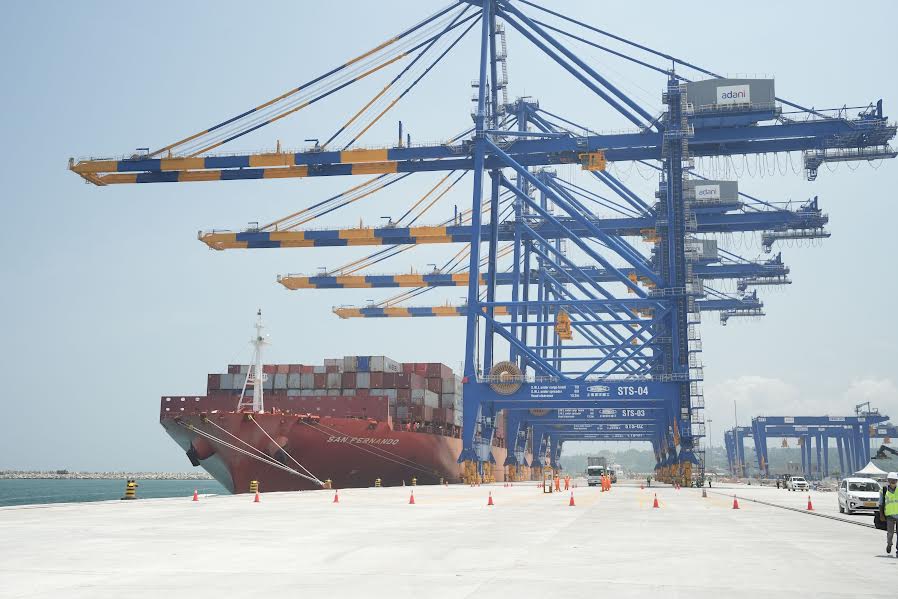
New Delhi: India’s maritime sector is undergoing a significant transformation, with ports no longer serving merely as cargo handling points but emerging as integrated logistics hubs that are strengthening the country’s entire supply chain network.
According to the Ministry of Ports, Shipping and Waterways, India’s 12 major government ports collectively handled a record 915.17 million metric tonnes (MMT) of cargo in the financial year 2025–26. This milestone reflects the growing importance of maritime trade in powering the nation’s economic growth.

From the early hours of the day, ports across the country witness intense activity, including container movement, bulk cargo unloading, and seamless transportation through dedicated freight corridors. This continuous cycle plays a crucial role in boosting India’s trade, industry, and export ecosystem.
However, the most notable shift is structural. Indian ports are increasingly evolving into end-to-end logistics hubs, integrating port operations with rail and road connectivity, warehousing, and inland distribution systems. This integrated logistics model is enabling faster, more reliable, and cost-effective cargo movement, enhancing India’s competitiveness in global trade.
Key government ports such as Deendayal Port, Mumbai Port, Jawaharlal Nehru Port, Paradip Port, Visakhapatnam Port, and Chennai Port continue to play a vital role in handling essential commodities like coal, crude oil, fertilizers, and iron ore. These ports remain critical to India’s energy security and manufacturing backbone.

At the same time, private sector participation is accelerating the transformation. Adani Ports and Special Economic Zone has emerged as the country’s largest private port operator, strengthening end-to-end logistics capabilities. Similarly, JSW Infrastructure is expanding capacity along the western coast, while DP World is enhancing container terminal operations and connectivity to facilitate smoother trade flows.
A notable example of this growth is Mundra Port, where a single shipment recently saw the export of around 6,000 cars—highlighting India’s growing strength in the automobile sector and the success of initiatives like Make in India in expanding global market access.
The impact of these developments is visible across both exports and imports. Reduced turnaround time at ports, faster container clearance, and timely delivery of goods are significantly improving trade efficiency.
Overall, India’s maritime ecosystem is advancing with a dual strength—on one hand, the scale and stability of government-run ports, and on the other, the speed and efficiency of integrated logistics networks driven by private players. As a result, ports are now shaping cargo flows rather than just handling them, positioning India as a more agile and competitive player in global trade.







 ---------------------------------------------------------------------------------------------------